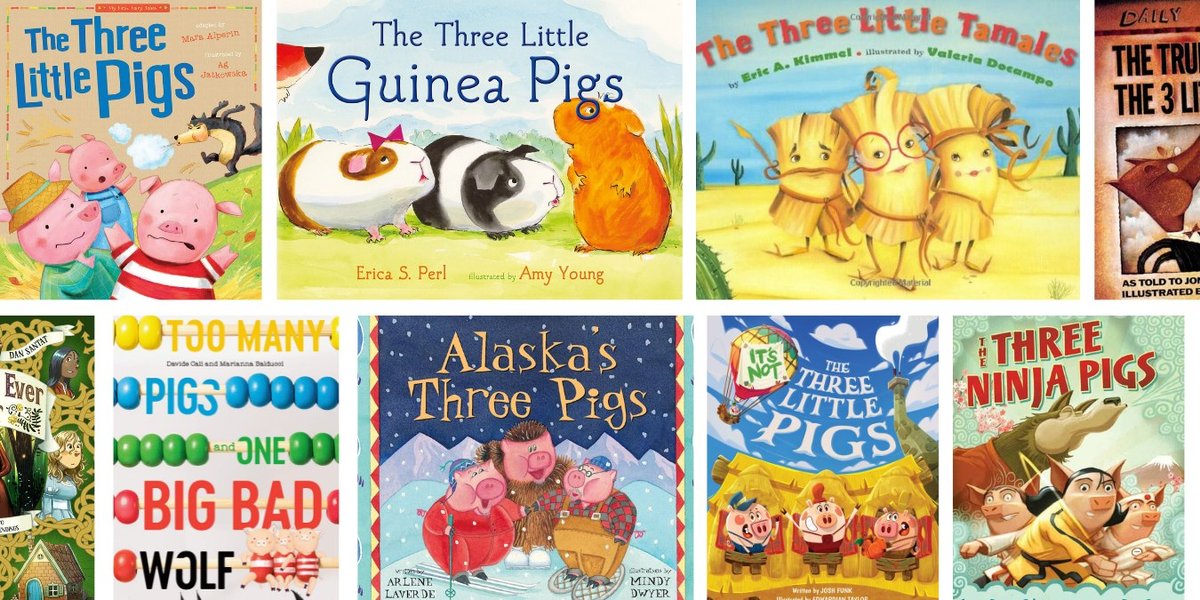
The huffing and puffing of a hungry wolf and the earnest efforts of three porcine builders have echoed through generations, proving that some stories, even simple ones, possess an unparalleled staying power. But the tale of "The Three Little Pigs" isn't merely a quaint childhood memory; it's a living, breathing narrative that continues to evolve, reflecting and shaping our world in profound ways. From satirical swipes at modern society to poignant explorations of independence, the Modern Adaptations & Cultural Impact of 'The Three Little Pigs' reveal how a humble folktale can remain remarkably relevant, challenging us to look beyond its surface and reconsider its timeless wisdom.
At a Glance: What You'll Learn About the Pigs and Their Enduring Legacy
- "The Three Little Pigs" is a moral folktale, not a myth, teaching essential lessons about diligence and planning.
- Its core narrative, first documented in 19th-century Britain, symbolizes foresight, resilience, and the consequences of cutting corners.
- Modern adaptations are incredibly diverse, ranging from satirical commentaries on contemporary issues to psychological explorations and educational tools.
- A notable modern satirical adaptation reimagines the pigs as 30-something dependents, subverting the original moral in a humorous, yet insightful, way.
- The story's cultural impact extends to business strategy, personal finance, and social commentary, serving as a powerful metaphor for preparedness.
- Despite variations, most adaptations retain or reframe the core message: hard work and planning lead to lasting success, even in unexpected ways.
The Original Blueprint: Why We Still Talk About Straw, Sticks, and Bricks
Before diving into the fascinating world of modern reinterpretations, it's crucial to understand the bedrock upon which all these variations are built. "The Three Little Pigs" is a cornerstone of Western folklore, a traditional story passed down orally for centuries before its earliest documented appearance in James Orchard Halliwell-Phillipps' "Nursery Rhymes and Nursery Tales" in 1843. It's a folktale, a moral parable designed to convey universal truths, distinctly different from a myth which typically explains natural phenomena or religious beliefs involving gods and supernatural beings.
At its heart, the tale is a masterclass in symbolism, even in its simplest form. You have:
- The First Pig: Impulsive, valuing immediate gratification, choosing the quick and easy path by building a house of straw.
- The Second Pig: Slightly more thoughtful but still prioritizing ease, opting for a house of sticks.
- The Third Pig: The exemplar of diligence, patience, and foresight, who invests time and effort into building a sturdy house of bricks.
- The Big Bad Wolf: A powerful symbol of adversity, challenges, and the inevitable consequences of poor planning. He represents the external forces that test our foundations.
The key learnings are straightforward yet profound: the tale underscores the critical importance of hard work, preparedness, and delayed gratification. It champions thinking ahead, planning for future challenges, and the sheer value of dedication in achieving lasting success. Implicitly, it highlights the necessity of using quality materials and careful, durable construction—a message that resonates far beyond building homes. The resilience to overcome obstacles through perseverance is a core takeaway, demonstrating that shortcuts often lead to greater problems down the line. It's a foundational narrative that teaches not just about building a house, but about building a life. The enduring appeal of The Three Little Pigs story lies in its direct, relatable lessons.
Deconstructing the Classics: What Drives Modern Storytellers to Revisit the Pigs?
Why, in an age of complex narratives and digital wizardry, do we keep returning to a story about talking pigs and a wolf? The answer lies in the tale's inherent flexibility and its deep embedding in our cultural consciousness. Modern storytellers aren't simply retelling the story; they're refracting it through contemporary lenses, using its familiar framework to explore new ideas, challenge assumptions, and comment on the world we live in.
The motivations for adaptation are varied:
- Satirical Commentary: Using the established archetypes to poke fun at social norms, economic realities, or political absurdities. This often involves subverting the original moral.
- Psychological Depth: Exploring the characters' inner lives, their motivations, fears, and the complex family dynamics that might lead to such disparate outcomes.
- "Fractured Fairy Tales": Presenting the story from an alternative perspective (e.g., the wolf's side), challenging the simple good-vs.-evil dichotomy and promoting empathy or critical thinking.
- Educational Tools: Employing the narrative to teach specific skills or concepts, from engineering principles to financial literacy or even ethical decision-making.
- Social & Economic Relevance: Updating the "building materials" or "wolf" to represent modern challenges like housing crises, environmental concerns, or systemic inequalities.
- Pure Entertainment/Parody: Leveraging the story's recognition for humor, commercial advertising, or artistic expression that plays on audience expectations.
These adaptations don't just entertain; they invite us to re-evaluate the original story's implicit messages, demonstrating its remarkable capacity to stay relevant and provoke thought across generations.
When the Pigs Grow Up: A Case Study in Satirical Adaptation
One particularly vivid example of modern adaptation pushes the boundaries of the original moral parable into the realm of biting satire. Imagine the three little pigs, not as innocent youngsters, but as grown adults, still struggling with the concept of independence. This scenario, detailed in a satirical narrative, offers a stark, often humorous, contrast to the diligent, foresightful pig of the classic tale.
In this adaptation, Mother Pig, having read a book on "Parenting Adult-Aged Pigs," finally tells her three sons—all in their 30s and deeply engrossed in their Playstation—that it's time to move out. In a twist of modern dependency, she even allows them to take the Playstation with them, effectively bribing them into a semblance of independence.
Their "housing solutions" reflect a contemporary struggle:
- The First Pig: The quintessential embodiment of laziness, he opts for the path of least resistance: applying for welfare and moving into government-subsidized housing. His "house of straw" is now a bureaucratic construct, seemingly free but inherently unstable.
- The Second Pig: Only marginally more industrious, he chooses the temporary convenience of an extended-stay motel. His "house of sticks" is a rental, lacking true ownership or security, a common choice for those seeking immediate shelter without long-term commitment.
- The Third Pig: Despite having no job, he's "choosy about dwelling" and manages to build a brand-new house—financed with a staggering 120% mortgage. This satirical detail speaks volumes about speculative lending, the housing market's complexities, and perhaps a naive belief in the stability of a heavily leveraged asset. His "brick house" is outwardly solid but built on a precarious financial foundation.
The Big Bad Wolf, too, gets a modern makeover. He's no longer a purely predatory force but a "friend" of the pigs, enraged not by hunger but by the theft of his beloved Playstation. His pursuit becomes a comedic saga of mistaken priorities, as he picks the lock of the first pig's flimsy door (symbolic of the easily breached welfare system) and tricks a front desk clerk to gain access to the motel room.
The traditional narrative's climax—the wolf's repeated huffing and puffing—is replaced with a more grounded, albeit still absurd, confrontation. As the pigs take refuge in the third pig's overly mortgaged house, the "wolf" arrives, only to be chased away by an unexpected hero: the pigs' "nosy, ancient, and very cantankerous" next-door neighbor, wielding a baseball bat and cane. This neighbor, who had previously warned the pig "ten times in two days" about his property lines, represents a kind of old-school community vigilance or perhaps a cynical view of local busybodies inadvertently doing good.
The ending completely upends the classic moral. Far from achieving self-reliance, the first pig loses his welfare, the second is locked out of his motel, and the third faces foreclosure. All three revert to their initial state, returning to Mother Pig's house. In a final, humorous twist, Mother Pig doesn't mind their return; she enjoys playing the Wii with them, highlighting a generational shift where parental "tough love" sometimes succumbs to shared comfort and digital distraction.
This adaptation cleverly uses the familiar story as a vehicle for social commentary. It humorously suggests that despite various attempts at independence or different approaches to life, some individuals may indeed revert to earlier patterns of dependence or comfort. It subverts the traditional moral of hard work and self-reliance, painting a picture of modern life where the "wolf" might be a forgotten Playstation, and true independence remains an elusive concept for a generation struggling with prolonged adolescence or systemic economic challenges. It asks: what constitutes a "sturdy house" in a world where financial security is complex and instant gratification often wins out?
Beyond Satire: Diverse Approaches to the Porcine Saga
While satire offers a sharp critique, the story of the Three Little Pigs inspires a vast array of other modern adaptations, each with its own unique lens.
The Wolf's Side of the Story
One of the most popular contemporary twists is giving the Big Bad Wolf his own voice. In many "fractured fairy tales," the wolf is no longer simply evil but misunderstood, suffering from a terrible cold, or simply attempting to borrow a cup of sugar. Jon Scieszka's The True Story of the 3 Little Pigs! is a seminal example, where the wolf (A. Wolf) claims he was framed, merely trying to borrow ingredients for a cake, and his sneezes were misinterpreted as huffing and puffing. These adaptations encourage children and adults alike to consider multiple perspectives, questioning preconceived notions of villains and heroes, and promoting critical thinking about narrative bias. They underscore the idea that truth often lies in the eye of the beholder, or at least in a more complete account.
Social and Economic Commentary
Beyond the direct satire of the 30-something pigs, other adaptations delve into deeper socio-economic issues. Some reimagine the pigs as characters dealing with modern housing crises, where even a "brick house" might be unaffordable or subject to predatory lending practices. Environmental concerns might see pigs building sustainable homes, facing challenges from natural disasters exacerbated by climate change rather than a single wolf. These versions use the story to discuss:
- Affordable Housing: What does it mean to build a "secure" home when land is scarce and costs are prohibitive?
- Labor Exploitation: Are the "lazy" pigs a reflection of systems that don't reward diligent work fairly, or are they victims of poor economic choices?
- Community Resilience: How do communities band together when faced with collective adversity, be it a literal storm or a financial downturn?
By updating the "materials" and "wolf" to reflect these real-world pressures, the story becomes a powerful allegorical tool for discussing complex societal problems.
Educational Tools and Skill Building
The narrative's clear cause-and-effect structure makes it an ideal educational tool. Educators and instructional designers have leveraged it to teach:
- Engineering Principles: Exploring the structural integrity of different materials, the importance of foundations, and basic architectural concepts.
- Financial Literacy: Comparing investment strategies, the dangers of debt (like the 120% mortgage), and the value of saving and planning for the future.
- Project Management: Demonstrating the phases of a project, from planning and resource allocation to execution and risk management.
- Decision-Making: Analyzing the choices of each pig and their subsequent consequences, prompting discussions about short-term vs. long-term thinking.
In these contexts, the story moves beyond a simple moral tale to a practical framework for understanding real-world applications of diligence and strategy.
Psychological Explorations and Family Dynamics
Some adaptations probe the psychological underpinnings of the pigs' choices. Why is the first pig so impulsive? Is the second pig merely complacent, or does he suffer from anxiety about commitment? These stories might explore themes of:
- Sibling Rivalry: The implicit competition between the brothers for their mother's approval or their own sense of worth.
- Fear of Failure vs. Fear of Success: How these deep-seated fears might influence choices about effort and commitment.
- The Nature of Independence: What does it truly mean to be self-sufficient, and what are the emotional tolls of achieving it, or failing to?
These versions add layers of complexity, transforming simple characters into reflections of deeper human experiences.
Pop Culture Parodies and Commercial Usage
The widespread recognition of "The Three Little Pigs" also makes it prime fodder for pop culture parodies and commercial advertising. From insurance commercials advocating for "brick house" policies to public service announcements promoting emergency preparedness, the story's shorthand for "good planning versus bad planning" is a marketing dream. Memes, political cartoons, and even stand-up comedy routines frequently reference the wolf, the pigs, and their houses, proving its ubiquitous presence in our shared cultural lexicon. These quick, often humorous references don't always retell the story, but rather allude to its core message, trusting the audience to fill in the blanks.
The Enduring Echo: Cultural Impact of the Three Little Pigs in Modern Society
The continuous flow of adaptations isn't just a testament to the story's versatility; it's a clear indicator of its profound and ongoing cultural impact. "The Three Little Pigs" has transcended its origins to become a foundational metaphor, deeply embedded in our language, thought, and even our collective unconscious.
Metaphorical Power in Everyday Life
The story provides a remarkably accessible framework for understanding complex ideas across various domains:
- Business Strategy: Companies are encouraged to "build a brick house" by investing in robust infrastructure, thorough planning, and sustainable practices, rather than cutting corners with "straw" or "stick" solutions that might crumble under competitive pressure or market changes. Discussions about "future-proofing" or "resilience planning" often draw parallels to the third pig's foresight.
- Personal Finance: The tale serves as a powerful analogy for financial planning. Saving, investing wisely, and avoiding excessive debt are often framed as "building a brick house" of financial security. Conversely, impulsive spending or relying on unstable income sources is akin to building with straw, vulnerable to the "wolf" of economic downturns or unexpected expenses.
- Education and Parenting: Beyond direct instruction, the story's lessons about perseverance and delayed gratification become integral to character building. Parents and educators use it to instill values of hard work, responsibility, and the understanding that effort often precedes reward. It teaches children that true strength comes from careful construction, not just outward appearance.
- Public Policy and Infrastructure: The metaphor extends to national and local planning. Debates about infrastructure spending, disaster preparedness, and the need for durable public services often invoke the image of building strong foundations versus flimsy ones. A nation's resilience against natural disasters or economic shocks can be seen through the lens of its collective "brick house" mentality.
- Personal Development: On an individual level, the story encourages self-reflection on one's own approaches to life's challenges. Are you building your career, relationships, or personal well-being on solid foundations, or are you opting for quick fixes that might not withstand the "huffs and puffs" of life? It's a call to proactive living rather than reactive crisis management.
Shaping Public Discourse and Challenging Norms
Modern adaptations of "The Three Little Pigs" do more than just reflect culture; they actively shape it. By presenting the pigs or the wolf in new lights, they can:
- Challenge Simplistic Morals: Adaptations that give the wolf a voice or critique the pigs' choices force audiences to move beyond simple good/evil binaries, encouraging empathy and a more nuanced understanding of complex situations.
- Spark Dialogue on Contemporary Issues: When the "houses" represent welfare systems or over-leveraged mortgages, the story becomes a vehicle for discussing socio-economic policy, generational entitlement, and financial ethics in a relatable, accessible way.
- Promote Critical Literacy: By deconstructing a beloved tale, adaptations teach audiences (especially children) to question narratives, consider underlying messages, and understand that stories can be interpreted in multiple ways, fostering a more critical engagement with all forms of media.
- Normalize Adaptation and Creativity: The sheer volume of variations demonstrates that stories are not static artifacts but dynamic cultural entities that can be reinterpreted and reimagined to stay relevant, encouraging creativity and innovation in storytelling.
The cultural impact of "The Three Little Pigs" is therefore cyclical: the original story provides a powerful framework, modern adaptations infuse it with contemporary meaning, and in turn, these adaptations reinforce and expand the story's metaphorical power within our shared consciousness, ensuring its legacy for generations to come.
Shedding Light on Common Misinterpretations
Despite its ubiquitous presence, "The Three Little Pigs" is sometimes misunderstood, particularly in the context of its modern evolutions. Let's clarify a few common misconceptions:
Is it just a scary story meant to promote fear?
No, not at all. While the wolf is a formidable antagonist, the core message of the story, as highlighted in historical analyses, is about diligence and preparedness, not fear-mongering. The "fear" is merely the catalyst that demonstrates the consequences of poor planning. The story's intent is to educate and empower, showing that through foresight and hard work, one can build resilience against adversity. It's a cautionary tale with an ultimately optimistic message: you can overcome challenges if you prepare adequately.
Is the story solely for children?
Absolutely not. While it's a foundational children's story, its lessons are remarkably relevant to people of all ages. As the satirical adaptation involving 30-something pigs clearly illustrates, the themes of self-reliance, financial planning, dealing with adversity, and the pursuit of lasting success are lifelong endeavors. Adults frequently draw parallels to the "three little pigs" in their careers, investments, relationships, and personal projects. The story's simplicity makes its profound truths universally accessible, regardless of age.
Do modern adaptations lose the original moral message?
Generally, no, they don't. Even highly satirical or deconstructed adaptations tend to retain, or at least implicitly acknowledge, the core message of "foresight and hard work pay off." While some might playfully subvert the outcome (as with the pigs returning to Mother Pig's house), the underlying critique often hinges on the contrast with the original tale's virtue. By highlighting the consequences of modern "straw" and "stick" houses (like the 120% mortgage or welfare dependency), these adaptations still, in their own way, emphasize the value of diligence and preparedness, often by showing what happens when it's absent or insufficient in a complex world. The core message evolves, adapting to context, but rarely disappears entirely. It's about showing the message in a new light, not eradicating it.
Building Your Own Brick House of Foresight: Lessons for Today
"The Three Little Pigs," in its original form and its countless modern adaptations, offers more than just entertainment; it provides a profound framework for understanding success, resilience, and the human condition. As you navigate your own professional and personal landscapes, consider the lessons embedded in this timeless tale:
- Invest in Strong Foundations: Whether it's your skills, your relationships, your financial planning, or your business strategy, don't shy away from the effort required to build something robust and sustainable. Shortcuts might offer immediate gratification, but they often lead to greater vulnerabilities.
- Anticipate the "Wolf": Adversity, challenges, and unexpected events are inevitable. The wise individual or organization doesn't ignore these possibilities but actively plans for them. What are your potential "wolves," and how can you build a "brick house" against them?
- Embrace Diligence and Perseverance: The third pig's success wasn't instantaneous; it was the result of consistent effort. Cultivate a mindset that values hard work and sees challenges as opportunities to build something stronger.
- Question Your Narratives: Just as modern adaptations challenge the simplistic good-vs.-evil of the original, critically examine the stories you tell yourself and the ones presented to you. Are there other perspectives? What are the underlying assumptions?
- Adapt and Reinterpret: The enduring power of "The Three Little Pigs" lies in its adaptability. Don't be afraid to take foundational principles and apply them creatively to new situations, reinterpreting their meaning to fit contemporary challenges.
Ultimately, the tale of the three little pigs is a vibrant testament to the power of storytelling. It reminds us that even the simplest narratives can carry immense weight, offering guidance, sparking conversation, and continually evolving to reflect the complexities of our ever-changing world. By understanding its origins and embracing its modern forms, you gain not just a deeper appreciation for folklore, but also practical insights for building a more resilient and fulfilling life.